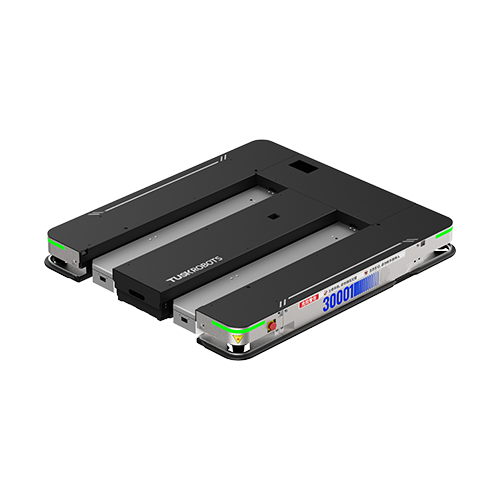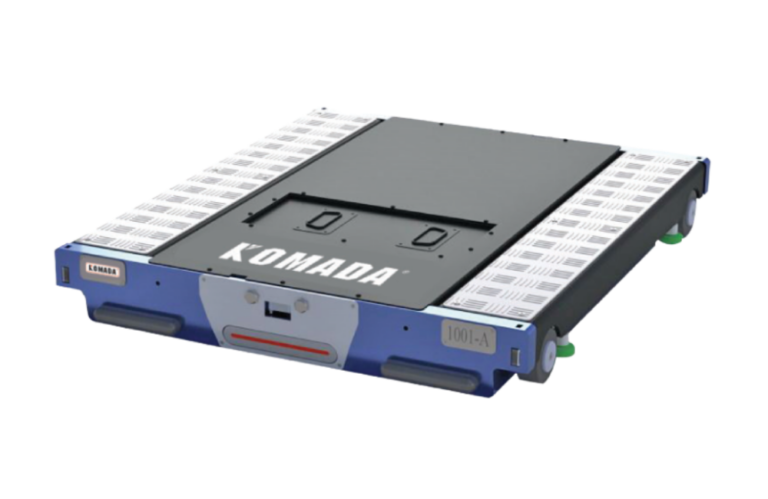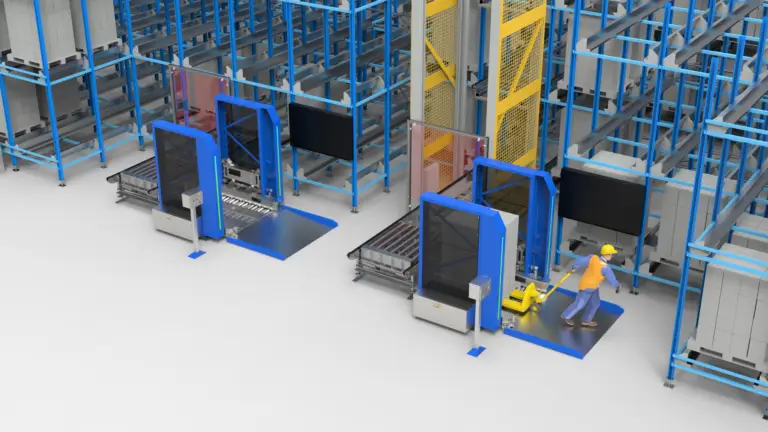
TUSKROBOTS Autonomous Pallet Handling Robots are the next generation of AGV vehicle. They move pallets autonomously across the facility floor using pre-defined routes or dynamic SLAM navigation, connecting to a central system for task assignment and seamless integration into your logistics operations. The result: significantly enhanced warehouse efficiency with minimal manual intervention.
Combined with the TUSK robot scheduling management system, TUSKROBOTS connect inbound and outbound docks, staging areas, production lines, and finished goods storage into one continuous material flow. Integrated with your WES and WMS, this delivers end-to-end traceability, control, and visualisation for intelligent factory logistics.


Based on TUSKROBOTS Autonomous Pallet-handling Robot, which are next generation of AGV vehicle called Autonomous Mobile Robot (AMR), and the TUSK robot scheduling management system, the material flow paths of inbound and outbound docks, staging areas, production line areas, and semi-finished and finished goods storage areas are interconnected. In conjunction with factory automation production lines, MES, and WMS systems, this enables end-to-end traceability, control, and visualization. The integration of these AMR vehicles provides a comprehensive and integrated solution for intelligent factory logistics, covering production and inventory management. This type of innovated AGV vehicle is crucial for modern manufacturing.

Obstacle avoidance

Rapid deployment

System accuracy

Maximum payload

Lightweight Loader

Return On Investment


工厂场景v7.gif)

NB Packaging Line and Warehouse Material Distribution Project in Hefei
Industry Case Studies
Project for Line-side Delivery of Aluminum Shells and Top Covers in a New Energy Company
Industry Case Studies
APR Handling Project for XAP (Electronic Group) Raw Materials and Finished Products
Industry Case Studies
An AMR is an intelligent material handling solution that transports pallets and goods automatically without manual operation, using navigation technologies such as SLAM or QR-code guidance to move safely within warehouses and manufacturing facilities.
AGVs follow fixed routes; AMRs use SLAM and dynamic route planning to navigate flexibly and avoid obstacles, adapting to changing warehouse layouts in real time.
Manufacturing, automotive, electronics, food and beverage, logistics, warehousing, and e-commerce businesses use AMRs to automate pallet transport, material replenishment, and production line logistics.
TUSK AMRs integrate with a WMS via an intermediary software layer typically known as the RCS (Robot Control System).
The Workflow: The WMS tracks inventory and generates an order (e.g., “Move Pallet A from Receiving to Aisle 4”). It sends this task to the TUSK ROBOT RCS via API protocols (such as WebSockets, RESTful APIs, or TCP/IP). The RCS then handles the real-time path planning, traffic control, and dispatches the closest available TUSK AMR to execute the physical move. Once completed, the robot signals back through the network to update the WMS inventory status.
Up to 1,200 kg, suitable for heavy-duty warehouse and manufacturing applications.
Not sure which solution fits your warehouse? Speak with our automation specialists for a tailored recommendation.