
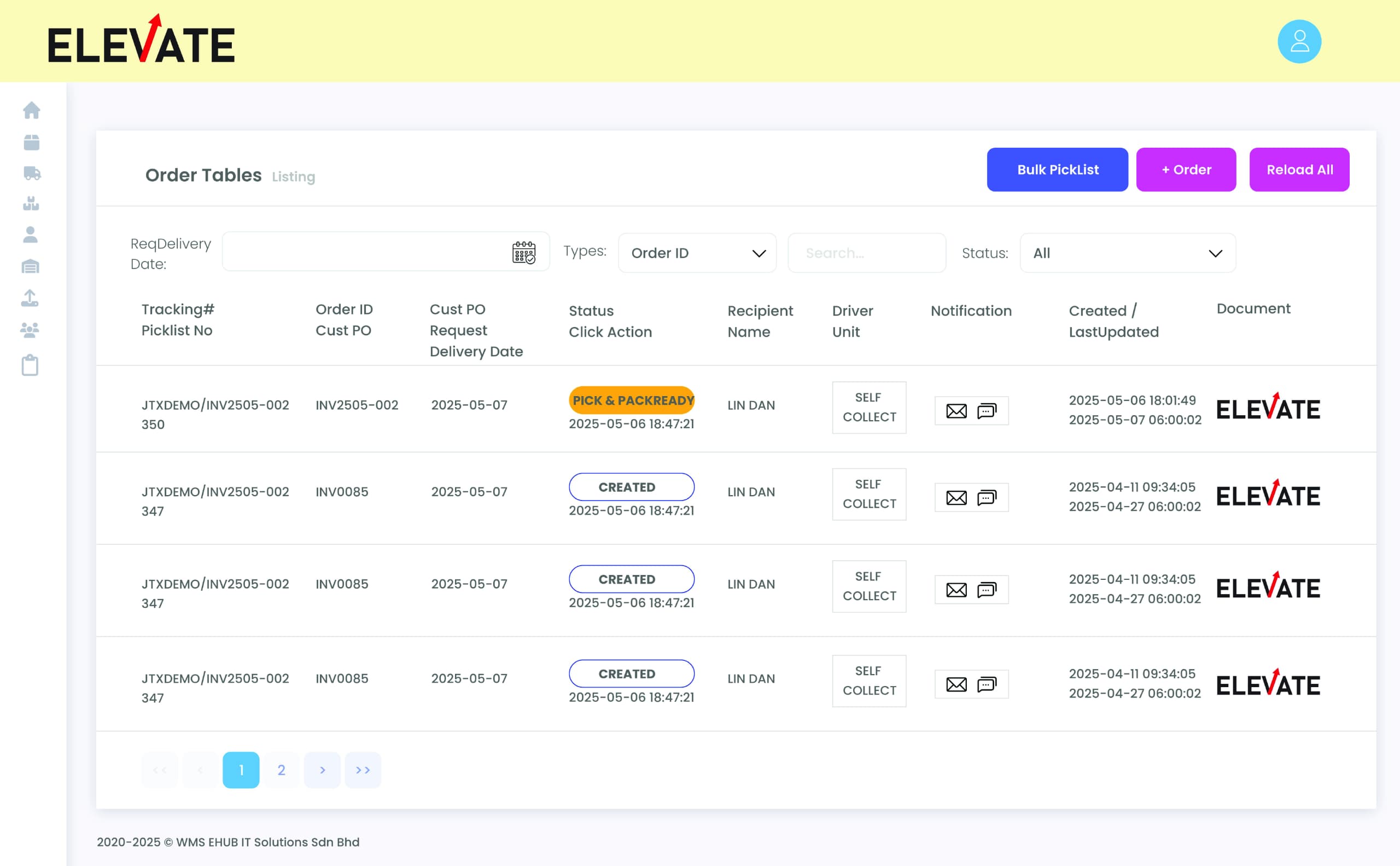
Cloud-Based WMS: Why Malaysian Warehouses Are Making the Switch
For years, running a Warehouse Management System meant a server room, an IT team on standby, and a hefty upfront licence fee before you moved a single pallet. That model is fading fast. Across Malaysia, warehouses — from mid-sized 3PLs to manufacturing distribution centres — are shifting to cloud-based WMS, trading server racks for a subscription and a browser tab.
This isn’t just a trend for large enterprises anymore. As automation becomes more accessible, cloud-based systems are levelling the playing field for smaller and growing operations that previously couldn’t justify the cost of traditional on-premise software.
What is a Cloud-Based WMS?
A cloud-based WMS is warehouse management software hosted on remote servers and accessed via the internet, rather than installed on local hardware inside your facility. Instead of purchasing servers and maintaining them in-house, your warehouse team logs in through a web browser or app — much like using Gmail instead of running your own email server.
All data — inventory levels, order status, staff activity — is processed and stored in the cloud, accessible from anywhere with an internet connection, whether that’s the warehouse floor, a manager’s laptop at home, or a regional office overseeing multiple sites.
On-Premise vs Cloud-Based WMS
| Factor | On-Premise WMS | Cloud-Based WMS |
|---|---|---|
|
Upfront cost |
High (servers, licences, IT setup) |
Low (subscription-based) |
|
Deployment time |
Weeks to months |
Days to weeks |
|
Maintenance |
Requires in-house IT team |
Handled by the provider |
|
Scalability |
Requires additional hardware investment |
Scales with subscription tier |
|
Access |
On-site only (unless VPN configured) |
Accessible from anywhere |
|
Updates |
Manual, often costly |
Automatic, included in subscription |
Why Malaysian Warehouses Are Making the Switch
1. Lower barrier to entry for growing businesses: Malaysia’s warehousing sector includes a large number of SMEs and mid-sized 3PL operators who previously found on-premise WMS cost-prohibitive. Cloud-based subscription pricing removes the need for a six-figure upfront investment, making automation-grade inventory management accessible much earlier in a company’s growth curve.
2. Faster deployment means faster ROI: Because there’s no server procurement or lengthy on-site installation, cloud-based WMS can often go live in a fraction of the time of a traditional system — critical for businesses that can’t afford weeks of operational disruption during implementation.
3. Built-in scalability for seasonal and growth swings: Malaysian warehouses serving e-commerce clients regularly face sharp seasonal spikes — think 11.11, 12.12, or Raya-season demand surges. Cloud-based systems can scale processing capacity to match these peaks without requiring a business to own excess hardware capacity that sits idle the rest of the year.
4. Reduced dependency on in-house IT: Smaller operations often don’t have a dedicated IT department to manage server uptime, security patches, or backups. With a cloud-based WMS, this responsibility shifts to the software provider, freeing internal teams to focus on warehouse operations rather than infrastructure maintenance.
What to Look for When Choosing a Cloud-Based WMS
Not all cloud-based systems are built the same. When evaluating options for a Malaysian warehouse operation, consider:
- Local data compliance — confirm where your data is hosted and whether it aligns with Malaysia’s data protection requirements
- Integration capability — the system should connect smoothly with existing ERP, e-commerce platforms, and automation hardware such as AMRs or ASRS systems
- Uptime guarantees — since operations depend on constant access, check the provider’s service level agreement (SLA) for uptime commitments
- Local support availability — cloud doesn’t mean remote-only support; responsive local assistance matters when issues arise during peak operating hours
Considering a move to cloud-based warehouse management? Explore Elevate WMS product page to see how a cloud-based system can streamline your operations — or get in touch with our team to discuss what fits your warehouse.
Frequently Asked Questions
Is a cloud-based WMS secure enough for sensitive inventory data?
Reputable cloud-based WMS providers use enterprise-grade encryption and regular security audits, often matching or exceeding the security standards of self-managed on-premise servers, which frequently lack dedicated IT security resources.
Can a cloud-based WMS work without a stable internet connection?
Most cloud-based systems require an internet connection for real-time syncing, though some offer limited offline functionality that syncs once connectivity is restored. It’s worth confirming this capability if your facility has inconsistent connectivity.
How long does it typically take to migrate from an on-premise system to a cloud-based WMS?
Migration timelines vary based on data volume and integration complexity, but many cloud-based WMS implementations can be completed within a few weeks, significantly faster than traditional on-premise deployments.
Is cloud-based WMS suitable for small warehouses, or only large operations?
Cloud-based WMS is particularly well-suited to smaller and mid-sized operations, since the subscription model removes the large upfront investment that made traditional WMS impractical for smaller warehouses.