

Automotive Logistics Success: Auto Parts Leader Achieves Efficiency with Globl PTR ASRS
1. Global Automotive Parts Leader Transforms Warehouse Operations with Smart Solutions
This client is a major global supplier of car systems and auto parts, operating a regional distribution hub serving Southeast Asian markets, including Malaysia, where rising demand for automotive components made warehouse efficiency a critical priority. They manufacture essential body and chassis components, such as axles and control arms. As the business expanded, the company faced significant operational hurdles in its automotive logistics across the region.
Managing the auto parts factory warehouse became challenging due to poor storage, slow material handling, and complicated order requirements. These issues severely slowed the overall workflow, making a shift to automotive warehouse automation necessary.
To solve this, the company adopted smart warehouse solutions. These systems streamlined operations, drastically improved accuracy, and boosted overall efficiency. The change allowed the warehouse to support faster production without sacrificing quality.
They also integrated automation into the factory’s system. This significantly cut the need for manual labor. It also provided clearer inventory visibility and ensured faster turnaround times from storage to final delivery. These critical changes support steady business growth across the region, including operations serving the Malaysian automotive supply chain.
2. The 4 Major Bottlenecks in Auto Parts Logistics
As production volumes grew and product variety increased, several bottlenecks emerged. These four major issues heavily impacted the warehouse’s efficiency, accuracy, and cost structure:
- Low Space Utilization: The company handled many products in different sizes and models. Organizing the warehouse became difficult, leading to inefficient layouts. It was hard to increase storage capacity for scaling.
- Inefficient Manual Operations: Relying on manual warehouse methods caused frequent mistakes and delays. Disorganized storage, difficulty locating items, and incorrect inventory records disrupted daily work.
- Complex Batch Management: Every batch of components needed precise tracking. Raw materials, production dates, and quality levels all varied. Traditional management systems struggled to differentiate and track these batches effectively.
- High Operating Costs: The warehouse relied heavily on manual labor and outdated equipment. Labor-intensive processes, high maintenance needs, and poor energy use drove up overall operating expenses.
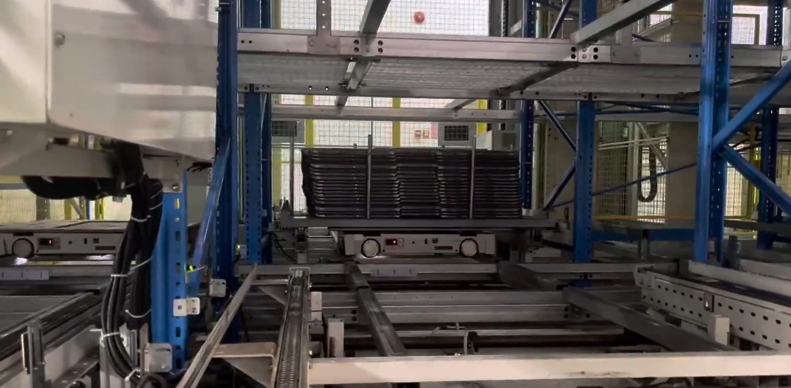
3. The Solution: Implementing Globl PTR ASRS for Automotive Warehouse Automation
To address these growing operational problems, the client partnered with Globl PTR. They implemented a cutting-edge automated storage and retrieval system (ASRS) solution. This partnership delivered measurable performance improvements:
3.1 Globl PTR ASRS Maximizes Auto Parts Storage Density
- Globl PTR’s system uses precise math and AI technology to automatically sort, store, and retrieve products.
- This maximized warehouse space, increasing storage density by up to 40% compared to the previous manual layout.
- The result was a significantly better-organized facility with room for future scaling.
3.2 Automated Operations Improve Throughput
- Smart four-way shuttles from the Globl PTR system automated core tasks, including storage, retrieval, and inventory movement.
- This reduced manual work and cut handling errors by over 60% within the first six months of implementation.
- Overall operational throughput increased substantially, supporting faster order fulfillment.
3.3 Precise Batch Management for Critical Automotive Components
- Real-time tracking and digital recordkeeping enabled accurate monitoring of every component batch.
- This ensures complete product traceability and guarantees compliance with the strict batch control standards required in automotive manufacturing.
3.4 Reduced Costs Through Automation
- Automation reduced the need for extensive manual labor, contributing to a projected ROI within 18 months.
- Optimized workflows also decreased energy consumption and equipment wear.
- Together, these improvements made the warehouse more cost-effective and scalable for long-term growth.
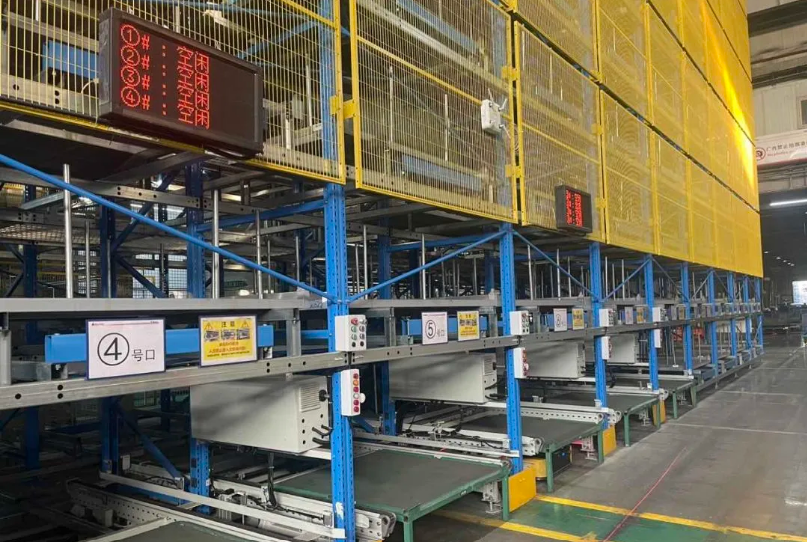
4. Transformation Results: Stronger Automotive Logistics with Globl PTR
By embracing smart warehouse solutions with Globl PTR, this global leader successfully transformed its operations — achieving 40% higher storage density, 60% fewer handling errors, and an 18-month ROI, with a strong foundation for continued growth across its regional operations, including Malaysia.
5. Take the Next Step in Automotive Warehouse Automation
Ready to move your warehouse From Chaos to Efficiency?
The challenges of complexity and low space utilization in automotive logistics require specialized automation expertise.
If your factory is ready to implement smart warehouse solutions and achieve the kind of measurable efficiency and cost savings detailed in this case study, don’t wait.
Contact the Globl PTR team today to schedule a consultation on how our ASRS and warehouse automation solutions can strengthen your supply chain and prepare you for future growth.
More Blogs
Our Solutions
Contact Us
Frequently Asked Questions
How long does an ASRS implementation typically take for automotive warehouses?
Most automotive warehouse automation projects, including four-way shuttle ASRS systems like Globl PTR, take between 8-12 weeks from installation to full operational readiness, depending on warehouse size and integration complexity.
Can this solution scale for smaller automotive parts suppliers in Malaysia?
Yes. Globl PTR's ASRS is modular, meaning smaller automotive suppliers in Malaysia can start with a smaller shuttle and racking configuration, then expand storage capacity as production volumes grow.
What kind of ROI can automotive warehouses expect from ASRS automation?
Based on similar automotive implementations, businesses typically see return on investment within 12-18 months, driven by reduced labor costs, fewer handling errors, and improved storage density.
Is batch tracking accuracy guaranteed with automated systems?
Yes. Real-time digital tracking ensures each component batch is logged automatically at the point of storage and retrieval, removing the manual recording errors common in traditional warehouses.